Recipe Sunday – Cheesy Vegan Cauliflower Casserole

Happy Sunday peeps! It has been a fairly stressful month with my work as I had organised quite a few events for the libraries of my district: it was the first time I had done something like this so my anxiety level was understandably relatively high. But all the events have been successful, well attended and the people involved were very happy as well as my manager. All this translated into the need for some good comfort food that could also tick the “healthy” box, hence the recipe I am sharing with you today.

Cheesy Vegan Cauliflower Casserole by VeganHuggs

I had a large head of cauliflower that I didn’t know how to use: couldn’t be bothered to make bang-bang cauliflower or similar and it was a bit too much for a cauliflower dip. Looking through the bookmarked recipes, here it is this beautiful casserole! Usually, I want easy and quick recipes and in this period I needed something that could be extra-easy and extra-quick. This was definitely the recipe!

VeganHuggs is one of my favourite websites for vegan recipes: I don’t know you, but sometimes, I can try many recipes from a website and they never come out great, while with some other websites, the result of any recipe I try is just delicious. Does this happen to you?

And VeganHuggs is just one those websites in the second category.

So further ado, here is the recipe – just a note, instead of steaming the cauliflower, I roasted it with a pinch of salt, pepper, turmeric and olive oil for 15 minutes at 220C.

INGREDIENTS

  • 1 large head cauliflower , cut into bite-size florets (about 2.5 pounds)
  • 1 cup panko
  • 2 tablespoons vegan butter , melted (+ more for greasing dish)

Cheese Sauce

Optional Toppings

  • Fresh-cut parsley
  • Crushed red pepper flakes

METHOD

  • Preheat oven to 400° F (200° C). Lightly grease a 3-quart casserole dish and set aside. 
  • Combine the melted butter, breadcrumbs and a pinch of granulated garlic in a small bowl. Set aside.
  • To soak cashews, boil water in a small pot and remove from heat. Add cashews and cover for 15-20 minutes, until softened (*see note).
  • While the cashews are soaking, you can steam the cauliflower. Place about 1 ” of water into a med/large pot that will fit your steamer basket. Place your basket on the bottom and cover pot with a lid. Turn heat to high and bring to a boil. Once boiling, turn heat to med-low to maintain a low boil and place cauliflower florets into the basket. Cover and steam for 7-10 minutes, until just tender. Uncover and remove from heat. 
  • Drain and rinse cashews (discard soaking water). Now place all cheese sauce ingredients in a high-speed blender. Blend until cashews have completely broken down and the sauce is smooth, about 1-2 minutes.
  • Pour cheese sauce into a medium skillet/pot over medium heat (I used the same pot for steaming the cauliflower). Cook for 4-5 minutes until it thickens up a lot and becomes slightly stretchy. Stir often to prevent burning. If sauce is too thick for your taste, you can add a little soy milk or broth to thin it out. Taste for seasoning, and add more if needed.
  • Pour ½ the cheese sauce on the bottom of the greased casserole dish. Now add the cauliflower on top in one layer. Pour the remaining cheese sauce on top of the cauliflower. Now sprinkle with prepared breadcrumbs and cover with foil. Place in the oven for 15-20 minutes, until cheese is hot and bubbly. Remove foil and bake for another 10 minutes or until breadcrumbs are light golden brown. Remove from oven. *Sprinkle with optional fresh-cut parsley and crushed red pepper flakes. Enjoy! 

This is the perfect healthy comfort food that doesn’t require much work and the result will be just great. It sustained me for 2 dinners and 1 lunch and I tell you, it was a lifesaver!

It might be that it’s a bit too warm to turn the oven on these days, but maybe you could make it for the next rainy day.

Anyway, I hope you’ll try and enjoy this recipe.

Have a lovely Sunday!

Love,

TVCL xx

In Full Support Of Human Rights

Since I was a little girl, with a Catholic education in a patriarchal society, I always felt that there was some disproportionate focus on the female reproductive system. My mom taught me to sit with my legs closed, not to talk to older men, and to always be presentable. When I got my first period, she explained what that meant, then she cried, grabbed a drink and called her mom. I understood only later her actions.

Getting your first period means that you are fertile and could get pregnant. I was 11. I might have had a crush on a boy and a kiss on the cheek from him was the height of my sexual thoughts. My main concerns were getting the best grades possible at school, spending time with my parents at weekends and reading.

A couple of times, when I was a bit younger, relatives tried to make me hold infant cousins: the worst horrible experience of my life. Another bad experience was the same relatives trying to convince me that it was fun to touch my pregnant auntie’s belly. I just wanted to go back home to my stuffed animals and dream of a future where I would be a successful veterinarian helping all the animals possible (spoil alert, I never became a vet because I would have had to disembowel alive animals, which is something I didn’t think it would have been useful for such an education – it wasn’t until later that you could opt-out of such practices).

In my teen years, I felt ever so strongly about the freedom of the woman’s body: everyday there seemed to be some murder where the victim was a woman and many were the attacks on a law that was established in the 70s that granted legal status to abortion (despite that being just in theory as there are many conditions that have to be applied to each case of interruptions of pregnancy).

The thought of wanting to get sterilised formed sometimes in my teens: in the high school I attended, they taught sexual education and were quite clear on the dos and don’ts of sexual intercourse and I knew ever so strongly that having children wasn’t something for me and I was wondering I could make this happen. I talked to my mom about sterilisation and she said it wasn’t possible: if you have your period you should bear children. “Thankfully”, because of some problems with my period, I had to take the pill, so that saved me for a while. But I was already looking into how to get abortions, should a pregnancy happen – it would have not been easy to get such a service because one of the conditions of the 70s law on abortion was to go through the family doctor who could have told my parents. And I got into the darker side of the research, where you see the alternative methods to interrupt a pregnancy: from metal clothes hangers to poisonous herbal infusions. I wanted to know that a solution was possible.

And I was wondering, why put women through this? Especially if it is not (allegedly) a government based on religion, why would people want to punish women for not wanting to be pregnant, or interrupt unwanted pregnancies?

Then, I moved to another country when I was 25. A couple of years later, after I settled a bit better, I asked my GP how I would go on asking to get sterilised. The GP said that since I was still under 30, I should have waited until I got to that age because I might found a boyfriend with whom I wanted to make lots of babies. I said thank you, very useless as I know I don’t want children and I won’t come to this place again. In the meantime, I moved again, got a fulfilling job and a loving and supporting boyfriend. Still haven’t managed to get sterilised, but this doesn’t mean that I want kids. We had “the talk”, basically at the beginning of our relationship, where I explained very clearly that I don’t want kids because that’s who I am and if he wanted kids he better find someone else as I didn’t want to make him unhappy. He accepted the terms and seems okay with it.

To be clear, I never had an abortion, always been careful with pills and condoms and also abstinence. But these are not viable things for everybody and if an unwanted pregnancy happens, women should be able to interrupt that. It doesn’t matter the backstory, the reasons are between the woman and her body.

People around the world have been giving emotional excuses to prevent women from getting abortions, from the “killing a baby” argument to “foetuses feel every bit of pain”. Often, the same people wouldn’t give women enough support during and after the pregnancy is completed, they are pro-death-row and against refugees.

Access to reproductive services is a women’s right meaning that they are human rights.

Already with Trump, those against abortion felt so much more empowered, we thought it was over, but then later there have been more attacks on this right – see what is happening in the U.S.A. with Roe v. Wade which potentially could have a ripple effect in other Countries.

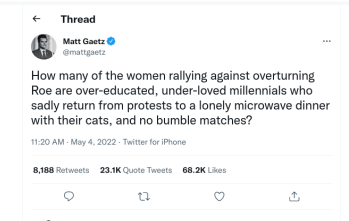
And then there was this tweet:

I have been thinking about it quite a lot these days. It is not only an attack on women’s rights: it is also an attack on education and on women’s education. What does Matthew Gaetz mean with “over-educated”? Is an over-educated woman someone with multiple degrees? Or does this term apply to young women with a high school education? What are the premises of this tweet? Because in my circle of friends, I have women with PhDs, Master’s degrees, and high school graduates, and only two don’t have a child: one has a gynaecological disease that prevents her to get pregnant (despite trying all the possible solutions, such as multiple sessions of unsuccessful IVF), the other one got out of a long relationship because her fiance decided he didn’t want to be with her anymore after 10 years together and she had to pick herself up again.

Over-educated isn’t a thing. There isn’t anything like too much education. Education it’s a right, a human right.

And “over-educated women” is not a thing.

“Under-loved millennials”? Why? It’s not only at this moment in history that women want freedom for their bodies: the suffragettes are just one such example.Trying to focus the attention on the boomer/millennial/Gen Z etc divide only wants to derail the attention from the fact that there is an attack to human rights.

“Lonely microwave dinner”? Because said women are working and “failing at their wifely duties”? This is minimising the positive impact of women’s work in the community. One of the reasons women started working was to support their families, such as their children because the men in their lives cannot support them enough. If women don’t have time to make a dinner from scratch is because they are out doing important work, for their community and/or for their families. And even women that stay at home, might have many reasons why they can’t make a homecooked meal.

I won’t even comment on the cat thing.

Such a tweet is just despicable. And is not the only one: I took this one because is the latest example of such attacks.

And this year we already had the Pope complaining that people prefer pets over children, a very disdainful thing as apparently, the world population is dwindling (this from the leader of an organisation that has celibacy as one of their main principles). Honestly, this is a weird claim: the current global population is 7.753 BILLION. In the 1960s it was roughly 3 billion, meaning that in 60 years the people on this planet doubled. We got to 3 billion human beings in AT LEAST 2 millennia, and, yes, there have been improvements and progress in many aspects of human life which made living easier. But this doesn’t mean that we have to reproduce like rabbits. Also, what do you want to do with almost 8 billion people?

All this just put pressure on people, female and male alike. Let people live their lives, for goodness sake!

Anyway, to conclude and summarise all this,: wanting to prevent safe access to reproductive services it’s an attack on human rights. Women should be able to access abortion, the pill or whatever they need when they need it.

Just my thoughts.

Have a good night, beautiful kittens!

Love!

TVCL, xx

Recipe Sunday – Savoury Rhubarb and Cinnamon Red Lentil Curry

Happy Sunday everybody! Here Rhubarb season has just started and I got some delicious rhubarb stalks to make so many delicious recipes, savoury and sweet. Today I want to share a savoury one: Rhubarb and Cinnamon Red Lentil Curry.

A bit of background: I never had rhubarb until last year. I am part of a community group that delivers organic fruit and vegetables straight to my door and the products they bring are all from local farms or places around Europe (Spain, Italy, France etc.) that are certified organic and everything is obviously seasonal. So last year was the very first time I got rhubarb and I had no idea what to do with that! I knew that rhubarb is usually cooked in sweet recipes, but I really would have liked to try it in a savoury one. Looking around the internet, this is one of the recipes that inspired me the most and it didn’t disappoint a bit!

So I want to share it with you.

Savoury Rhubarb and Cinnamon Red Lentil Curry by LowlyFood

Ingredients

  • 200 g Rhubarb (very finely sliced)
  • 2 Large Onions (finely diced)
  • 4 Cloves Garlic (finely diced)
  • 2 Teaspoons Caster Sugar
  • 2 Teaspoons Cinnamon
  • 2 Tablespoons Garam Masala
  • 1/2 Teaspoon Cayenne Pepper (or generic chilli powder)
  • 750 ml Vegetable Stock
  • 300 g Split Red Lentils
  • 150 g Spinach
  • 30 g Fresh Coriander (roughly chopped)
  • 1 Tablespoon Vegetable Oil

Method

  • Heat the tablespoon of vegetable oil in a large saucepan over a medium-high heat. Pour in the chopped onions and garlic. Fry for about 2-3 minutes until the onions are nice and soft.
  • Add the 200g of sliced rhubarb into the frying pan along with the 1 tablespoon garam masala, 2 teaspoons of cinnamon, 2 teaspoons of caster sugar and 1/2 teaspoon of cayenne pepper. Cook for around a minute, stirring well to combine.
  • Tip in the 300g red lentils and 750ml of vegetable stock. Bring the pan to the boil, then turn down to a simmer, cover and cook for around 13 – 15 minutes until the lentils are cooked and the stock has reduced to a thick sauce.
  • Remove the pan from the heat and season to taste. Then stir in the 150g spinach and 30g chopped coriander. Stir the spinach and coriander until they have wilted sufficiently.

The suggestion is to eat it with pilau rice. It’s delicious!

Savoury Rhubarb and Cinnamon Red Lentil Curry

I hope you’ll enjoy it!

Love, T

TVCL xx

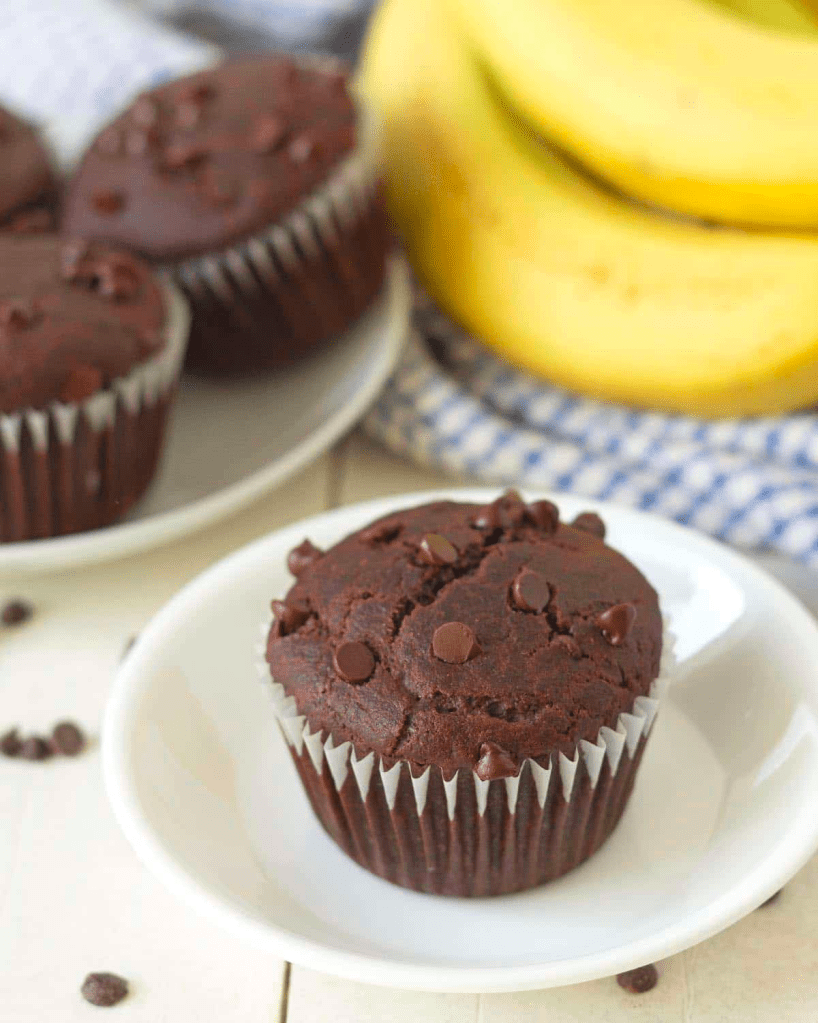
Recipe Sunday – Vegan Gluten-Free Chocolate Banana Muffins

Happy Sunday, kittens! Here in the UK, we’ve had a couple of days of very spring-y weather with some sunshine, but without being terribly hot. And I feel that this is still muffin weather. I tried this recipe a few days ago and oh, my goodness! it’s just too delectable.

Before reading this recipe, I was thinking I wanted to do something gluten-free and lo and behold, looking through my emails I found the newsletter by Delightful Adventures where she shared her recipe for Vegan Gluten-Free Chocolate Banana Muffins. It sounded perfect, I had all the ingredients, only a few steps and there you have an amazing result.

Vegan Gluten-Free Chocolate Banana Muffins by Delightful Adventures

The only thing I modified is the flour as I used ground oats: the recipe calls for 1 1/2 cups of gluten-free flour and I used the same amount of ground oats. The result is excellent!

At the same time, I have been a bit more generous in the scooping part, because I have one set of silicone muffin cups and they can yield a good amount of batter, so I got 8 muffins. Which is great because they are the perfect breakfast for the workweek, or you could have them as a quick snack for whenever.

Trust me, you won’t be disappointed.

I hope you’ll enjoy them as much as I do!

Enjoy your Sunday,

TVCL xx

After My Limpia Days

Hi beautiful people! This is going to be just a short post as a follow-up to the post about my latest Limpia which I finished a bit more than a month ago. So, here we go!

Energy levels

The first thing I noticed was that my energy levels were much improved. I felt that already after 2 weeks into the LimpiaI could wake up much more easily and ready to go on with my day. Also, I have been doing longer morning yoga sessions (always Yoga with Kassandra), which helped me much with getting on with my day.

What I Ate

For breakfast, I always had a bowl of porridge made with water and nut butter, adding either fresh (i.e. apples, pears, etc.) or dried fruits. Sometimes I would have fresh fruit as a snack before lunch. So this was easy. Porridge has many advantages from being extra filling to having important nutritional value. Should you not be able to eat oats, you could make a porridge with rice: just cook the rice until is nice and soft.

There are probably millions of porridge recipes around, but just to give you an idea this one is very close to what I do: PB&J Porridge by Domestic Gothess.

For lunch, I would have rice, quinoa or millet with sauteed veggies and legumes.

Dinner was the time I have used to diversify the menu. I made, stir fry, fritters, warm salads, etc. Most definitely you won’t starve! And you actually don’t have to think too hard about what

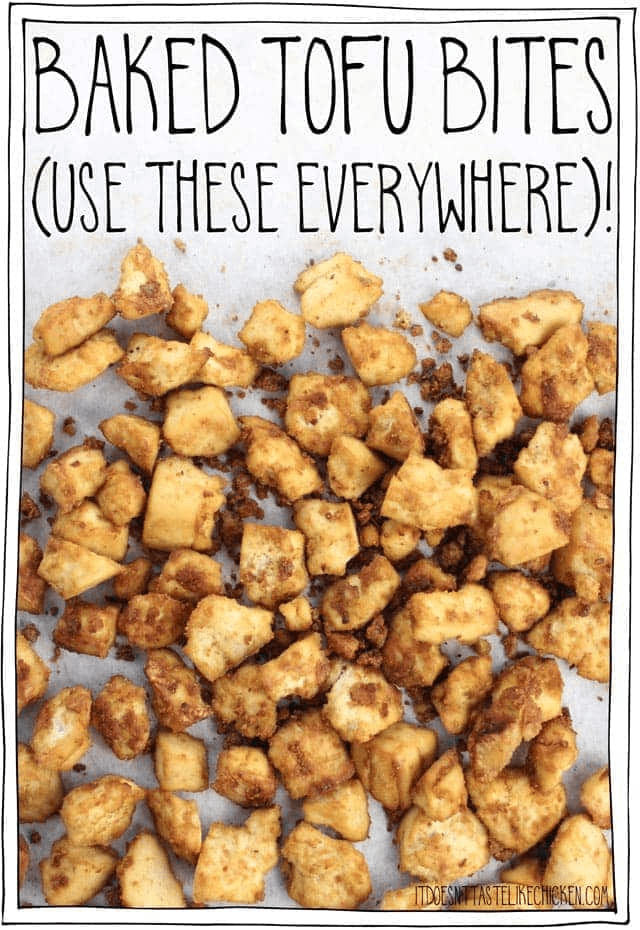
Baked Tofu Bites by It Doesn’t Taste Like Chicken

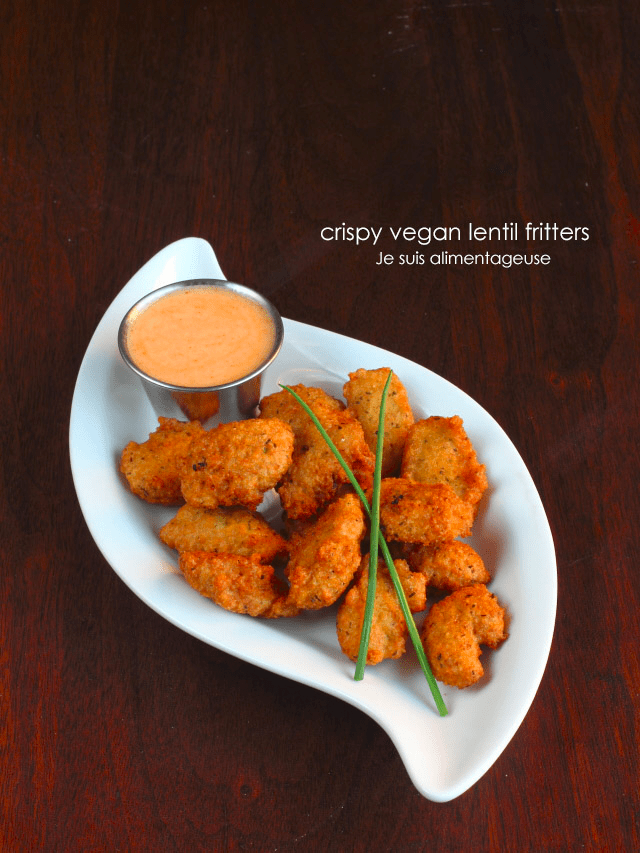
Vegan Crispy Lentil Fritters by The Viet Vegan

Spinach and Artichoke Dip by This Healthy Kitchen

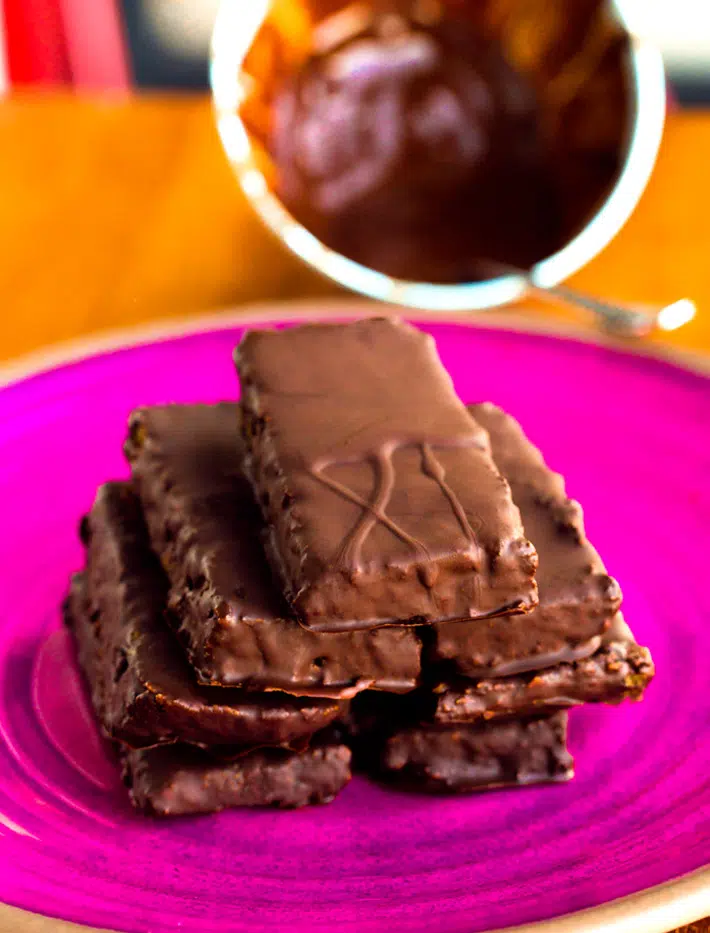
I also made dessert and sweets, like the No-Bake Oatmeal Protein Bars by Chocolate Covered Katie

or these Paleo Chocolate Pudding by The Bojon Gourmet

Conclusion on the Limpia

Limpia is a great way to detox your body: even if you should not feel the change in your level of energy, you will be doing something good for your body by feeding it fruit, veggies and whole foods. A suggestion, in case you feel uninspired, if you look for Vegan Paleo recipes without flours could give you good ideas while following the Limpia.

And while it should be done for 50 days, I’ve done it for 28 days but you could do it for 14 or 7 days. As the friend who told me about the Limpia: “50, 28 or fewer days…short Limpia is always better than no Limpia”.

With this, I leave you and if you’re going to do it, please let me know how it goes!

Love,

TVCL xx

My Tomato And Turmeric Soup

Hello peeps! Today I would like to share something that has helped me for almost 7 years when suffering from chest infections and bronchitis: the tomato and turmeric soup. I hinted in another post that that’s my remedy for this kind of illness, although it hasn’t worked for the Covid symptoms.

Now, I must say that this is not really a recipe of my own, but first of all, despite good research online I haven’t been able to find the original recipe again, and secondly, it is almost 7 years that I’ve been making it and I would say that it is become kind of my recipe, at least the one I am going to write about.

Then

One of the ailments that affected me since I was a child, was chest infections: when I was younger, I suffered these a lot, I got bronchitis so many times (sometimes twice a year) and I also got pneumonia twice (not that it’s something I’m proud of)! But it’s to give you a picture of my health. And obviously, each time meant taking loads of antibiotics. Obviously, when you are young, you just want to get rid of the illness, so you take whatever they can give you, so I took so many medicines.

Now

When I moved to the U.K., roughly 7 years ago, I obviously caught a chest infection. That time I went to the GP and took the antibiotics. However, I started developing the idea that there might be something else to help with chest infection problems. I started looking for information online using keywords such as “natural remedies chest infection”: this research conducted to several of the usual websites when you’re looking for medical assistance, such as WebMD and HealthLine, all of them giving the same remedies such as hot water and tea. [The best result I found is this one – Turmeric Tomato Detox Soup: however, it is not the “original recipe” and I haven’t tried it, so if you decide to make this recipe please let me know!] But then at some point, I found a page on another website providing the recipe of a tomato and turmeric soup perfect for chest infections, giving also all the specifics of how every single ingredient and their measurements worked its magic. The turmeric/black pepper ratio has to be 3:1 in order for them to activate in the right way. With the following recipe, I have been trying to keep those ingredients and measurements.

Since then, I have never had to get chemical antibodies again (and hopefully, it will stay that way!) and I get rid of the infection in 3-4 days.

Before proceeding, I have to say that I decided to share this recipe because is something that has always worked for me and never needed other drugs, but always consider to seek advice from a doctor if you are unsure.

The Recipe

The best way for this recipe to be effective is to use fresh tomatoes, however, tinned tomatoes can also be effective: I’ve made it a couple of times this way because I was out of fresh tomatoes and in no condition of going out to buy them so I used what I had.

Ingredients for two soups:

  • 5-7 big vine tomatoes, chopped;
  • 3 red onions, chopped;
  • 5 garlic cloves, minced;
  • 1 tablespoon olive oil;
  • 1 tablespoon turmeric powder;
  • 1/3 tablespoon freshly ground black pepper

Method:

In a pot, heat the olive oil and when hot add the garlic and fry for 30 seconds, then add the onions and cover to let cook until soft. At this point add the tomatoes and cover again for 3 minutes, until the tomatoes have released some juice.

Now add the turmeric and black pepper and give a stir to mix everything. Turn the heat off, cover and let cool off for a few minutes.

Finally, blend everything.

Serve hot.

Note: If you make this for your dinner, be prepared to sweat. A lot. This is great because the concoction is working.

I hope you won’t ever need to make this soup, but if you find yourself afflicted by bronchitis or chest infection and you make this recipe, let me know how it goes for you!

Speak soon!

Love,

TVCL xx

I Got Covid, Here Are Some Reflections

Square image with dark purple background, 2 triangles at the top corners in light blue and dark blue with corresponding copies at the opposite, bottom corners. AT the centre, the text "I Got Covid, Here Are Some Reflections" in light orange/cream.

Hello, my beautiful kittens! I hope everything is well with you as we’re already a few weeks into spring, the birds are singing and the flowers are blossoming. New season, new projects,

Well, for me, Spring brought with it my usual S.A.D. as well as Covid. Yes, I got the 21st-century plague, hence why I haven’t been here for the past weeks. But I am back now! So this is just a wee post to share my experience with Covid.

It all started…

Halfway through March, one night I started to feel quite feverish, but I attributed that to the cold weather. However, the next day I felt worse and a chesty cough started to develop: a lateral flow test confirmed my fear of having contracted Covid. We’ve been open for months now, and everybody seems to have been okay, without contracting Covid. But a few months ago (when the Omicron variant came around) one of my colleagues contracted Covid. After maybe a month, other colleagues started talking about people closer and closer to them, who got Covid. And then in March, one other colleague whose mother seemed to have contracted Covid and got confirmation of it: and they had it too. At that point, another colleague and me, both resulted positive.

How it went

Oooft, I spent a week feeling like s***: the fever lasted 3 days, with a temperature around 38 degrees Celsius while I couldn’t get rid of the cough for almost three weeks. The whole time, I was feeling exhausted, gravitating from the bed to the couch, with the occasional trip to the kitchen. My main thoughts were to feel better and to care for my cat. All the rest came second.

A note on the cough: usually I get rid of a chesty cough in around three-four days thanks mainly to my Tomato and Turmeric Soup (will write the recipe soon as it is the best natural drug against this kind of cough!), but it didn’t work in this case, obviously because the Covid virus is different from the usual chest infection/bronchitis. Really, if you catch “The Virus” the best course of action is to rest, let the illness run its course. And while I am very lucky because I have a job and they consider 10 days of Covid as a special paid illness that won’t affect the total of your sick days, I was thinking of all those people that don’t have a job as well those that can’t afford to take sick days (i.e. United States of America).

Some Reflections

I am very lucky because I have a job and they consider 10 days of Covid as a special paid illness that won’t affect the total of your sick days, but I was thinking about how this illness can affect other people, those that don’t have a job as well those that can’t afford to take sick days (i.e. United States of America) but have to stay home. Now, you would probably think “didn’t you already understand all this as it’s 2 years that we’re in a global pandemic situation?!”. And yes, obviously I thought of it, of all the people that ended up in ICT units in hospitals all over the world; of all the people who died; of all those who’ve seen their loved ones die and not be able to be there for their last goodbyes. Yes, I thought about all this. But it is different actually living the situation.

I was sick and isolated (now, the solitude is a condition I don’t mind at all, but many other people do need social interactions and this can be affecting their mental health, which doesn’t make recovery an easy process) and I wasn’t able to do anything in my flat as I didn’t have energy so the plates started piling up and the washing was scattered on the bathroom floor. As I was saying, the main focus was to heal from this bloody disease, so I spent the little stamina I had to boil the kettle (for teas and infusions of cloves and red pepper with a splash of apple cider vinegar), prepare quick, healthy food (mostly soups, mashed potatoes, etc.) and make fresh orange juice. And give food to the cat and clean her litter.

But the exhaustion that Covid brought with it has probably been the worst part. I could feel that the cough was going away, painfully slowly, but it was going away, and after 3 weeks I was almost cough-free. The tiredness, however, was another thing: getting up from bed was very difficult, but I knew I had to move at least to the sofa. Going to the kitchen and cooking something wan an even bigger task. In the past weeks, there was also mental tiredness: it was very difficult to even find a bit of focus to read as well as watch things (I have been re-watching some old shows, so that I didn’t have to trouble my brain to understand new things).

It took me four weeks to go back to a better level of energy. And I live by myself and am fairly healthy. But what about those single parents? And those with disabilities? Or the elderly.

While for some aspects and in some people, Covid might be similar to a bad cold or flu, the post-illness won’t go away for a few weeks. My colleagues and I, have exchanged our experiences and all of us felt shattered well after the cough had gone. It’s like it is taking something from you like it takes directly from the source of your energy to feed and then leaves and it leaves you almost energetically empty. I’ll be cheesy here and will say that from my experience, it left me almost empty of all kinds of energy, from physical to spiritual and mental.

To give you an idea, my usual day starts with waking up and doing between 30-45 minutes of yoga, having a light breakfast, going to work and for a walk after that, then coming back home to do some research for here. None of these things happened for almost the whole four weeks of recovery. Last week, I started doing some very gentle yin yoga in the morning for no more than 10minutes; I do as much as I can at work but without straining myself; there is no walk except for the walking from home to work and back; I’ve been doing some light researching and this is the very first time I’m managing the concentration to write one post.

In conclusion

Why am I writing this post? Because I think it’s good to share experiences. Because I don’t care if this is a natural disease or if it has been created in a lab (either or the fault resides in the greed of man, in the first case because it means man went where he wasn’t supposed to go, destroyed precious Nature and discovered a new disease, while in the latter, well, that’s obvious). Now this disease is around and we have to deal with it.

So, if you had it and you feel like you’re the only one out there being without energy in the aftermath of Covid, I hope this will make you feel less alone. If you haven’t had it, I hope this will give you some hope that if you’d get it, it would be okay.

Sending love and positive vibes,

TVCL xx

If you need a bit of a pick-me-up

Hey peeps! I hope you’re well and not reading this in the way of these memes. The countdown to Spring has started, although already since last week we have started feeling the new season approaching. [This will also bring up my SAD: don’t care what some people are saying, SAD is real for me and Spring has been a trigger for almost 15 years. But this year I am trying something new with a couple of food supplements, like 5-HTP and Ashwagandha, so fingers crossed!].

For the past 6 months, I had a bit of up and downs (who doesn’t?) and at some point, I wasn’t really able to sit down and write, never mind do research! Last year, I finally managed to find a good routine, working from home during all the lockdowns: waking up, exercising, working my 9-5, going for a decent walk as soon as I finished work, Skyping with my parents and then dedicating myself to do research and writing. Sure, it helped that I am one of those people lucky enough to be able to work from home and actually enjoy the new set-up. All this was overturned by going back to my physical workplace in August. Therefore, I went from working from home every day, then a few days a week for a few months and then back working in the workplace in the past 6 months. It has been exhausting. Yes, it is good to see my colleagues and be back in that beautiful Edwardian library and I am so lucky to even have this job. However, it is really tiring to re-create a sustainable routine, and all the contact with the public makes my work harder as my desk is just in a big room close to the public PCs so that when people have problems with the computers I am the first point of contact. This makes completing some simple tasks take much longer than if I were to work by myself or at home.

In the meantime, I also had to attend two weddings back home. I will not even go into how travelling during a global pandemic will affect your levels of stress and anxiety: it doesn’t matter if you’re vaccinated or not, there is so much documentation that you have to upload, print, show, etc, plus the various quarantine policies changing every so often. It was stressful and maddening and I still don’t get why people decide to get married during these times (I don’t get why they would do in normal circumstances, let alone when there are so many restrictions! 😬) especially when they want big parties with possibly all the alive family members and all their friends. Okay, they were good experiences, but a lot was thanks to alcohol because before and after the actual events I was on the edge with high levels of anxiety. For the last wedding, the whole month before the event I was so stressed out I could barely eat, couldn’t concentrate on much and at times I had difficulties breathing: it took me another two months after that wedding to calm myself.

But I kept being unable to go back to any kind of routine: getting up was a struggle, despite being awakened by the alarm I would snooze it and turn away in order to not have to get up. Once awake, I could go on with my day and would find joy in quite many aspects of it, but then as soon as I would be back home, I wasn’t feeling like reading nor watching new things. Felt constantly tired, physically and mentally.

And since the more tired you are, the more anxious you’ll feel and all around you it will seem like things are going wrong. Or at least your perception of things will probably be more on the negative and pessimist side. So it happens, that in that period, my laptop decided to stop working, the TV broke, while I was going out for work the house key broke into the lock and I left the door of the freezer open overnight with the consequence that the freezer stopped working for a week and had to cook all the food that was thawing to try and salvage it (then it started working again, and every night I check that is well sealed). In normal times, I would probably have laughed at all the stuff happening. But last year got me really down. One day, I was trying to send some stuff to my parents, the courier didn’t show up and I cried at work: that was the last drop, I needed a break from everything.

All throughout that time, I had one thing that really brightened my day: a daily podcast called “The Daily Pep” by Meg Kissack, “a coach, podcaster and professional rebel-rouser for fiercely creative, wildly multi-passionate & fabulously weird women”. She’s the founder of The Hummingbird Life, now The Rebel Rousers. Her 5-minute podcasts are filled with such positive energy and encouraging words, that I felt she was uplifting my spirit a little bit every time I tuned in, and every episode was helping me in regaining some sort of mental strength. While I am still in the process of improving my focus, these daily podcasts are just the perfect way to spur your creativity as well as provide light and get back some confidence in yourself.

Now, I absolutely don’t say that everybody suffering from anxiety, depression or other mental health problems will be cured by this podcast: I am sharing my very personal experience with an episode of anxiety that lasted several months and I found solace in listening to “The Daily Pep” every morning before going to work. It might not work for you, but you can give it a try.

At the same time, you don’t need to suffer from any mental health issue to enjoy this podcast: it is for the multi-passionate women like Meg, it is for those who seek a friendly (and sweary) advice in how to create good habits and a sustainable lifestyle. I started listening to this in 2020 and I feel so lucky that I found it! Meg also organises workshops to help you with your creativity and while I haven’t attended any yet, I will definitely attend some in the future.

So, it is all for today. I hope it will help you as much it helped me!

That’s all for today, have a lovely night!

Love,

TVCL xx

Recipe Sunday – Vegan Spinach and Artichoke Dip

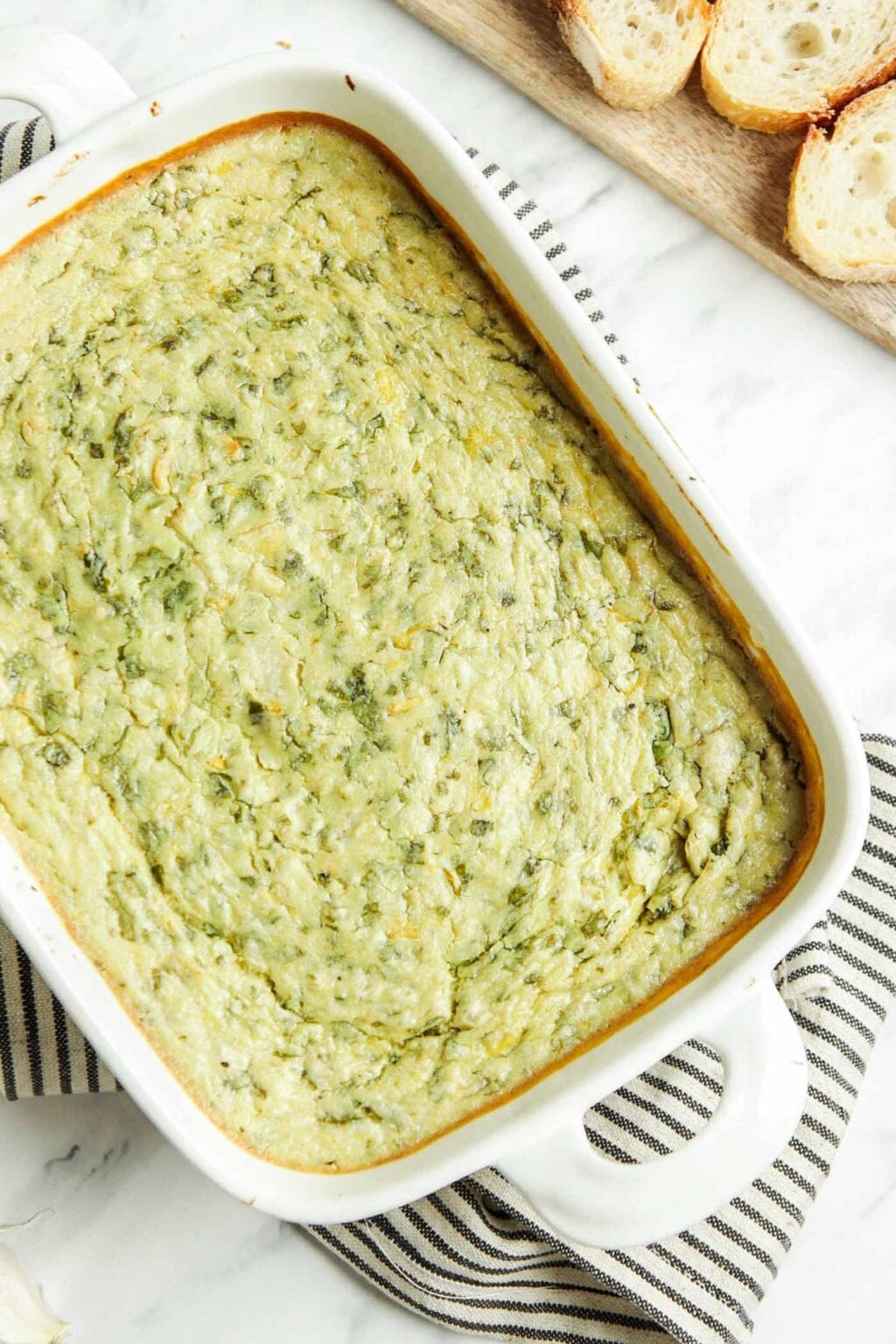
Happy Sunday beautiful kittens! For today’s Recipe Sunday I wanted to share with you a delicious recipe, perfect comfort food for this time of the year: full of veggies and warming you from inside. This Vegan Spinach and Artichoke Dip by Running on Real Food is perfect as a delicious side dish!

Vegan Spinach and Artichoke Dip by Running on Real Food

As usual, I like to share recipes that are really easy and delicious, as I think we all need something nice to eat especially during these even crazier days.

This recipe has ingredients that are found in your regular vegan pantry and fridge like cashews, plant-based milk, olive oil, garlic cloves, nutritional yeast, lemon juice, fresh spinach and artichoke hearts.

  • Preheat oven to 400 F (200 C)
  • Soak cashews for 6-8 hours or for 15 minutes in hot water: drain and add to blender with milk, water, nutritional yeast, lemon juice, salt and pepper until creamy and smooth.
  • Sauté minced garlic in non-stick pan.
  • Add garlic, spinach and artichoke hearts to blender until you get a chunky texture.
  • Transfer everything to a baking dish and bake for 15-20 minutes.

That’s it! Easy peasy 😉

Let me know if you try it and enjoy your Sunday!

Love,

TVCL xx
Vegan Travellers – Going to Iceland

Hello dearest friends! I have been wanting to write about travelling as a vegan for quite a while and it would be safe to say that this was one of the main aims of TheVeganCatLibrarian. Then, reflecting a bit on the various themes as well as on what happens around you and the people that you meet, I thought it would have been better to set some foundations on veganism and take it from there. While I believe that there is more to say on the basics of veganism, I would like to get started on the travelling-as-a-vegan side of the blog. And I would like to start with Iceland.

Introduction to Iceland

Sooo, Iceland was on my bucket list for ages. All those that know me, do know that I LOVE the cold: this goes to cold weather, cold countries (maybe less cold people but some are okay). Since I was a child, I have romanticised on these cold places as where I grew up didn’t get much snow and even in Winter, there is a thermal excursion of up to 20° C (meaning that even if we were to reach -10°C at night, during the day it would easily go up to +10°C). Also, for a kid heavily bullied because of her physical appearance, cold weather means not having to strip off the essential layers of comfy protection (see oversized sweaters). And another reason for which I love the cold is that it’s much easier to cope with it than with the heat: if you have enough clothes, you can survive, and you can also move without fearing to faint. Note: I am talking of up to -15, being well wrapped up or being able to have a warm shelter and warm food; I am not talking of extreme situations nor I am saying going to below zero temperatures without being well equipped, I am not *that* naive; and I know that there are people who thrive in the heat. The fact remains, that I have always loved autumn and winter much more than spring and summer (so much so that spring makes me feel unwell and you can read more here).

Iceland sits on the Northern Hemisphere, almost in between the European continent and North America: it is very frequent for flights to stop in Reykjavik to refuel and people are also stopping there for one or more nights on their way to the other continent. Iceland is also close to Greenland and it is possible to do a day trip from Reykjavik (although it is expensive). From the UK, the easiest way to get to Iceland is by flight and it takes roughly 2hours.

Interesting Politics

What was even more attracting to me, was hearing how, after 2008 economic hell basically created by the banks, Iceland went against the decision that ALL THE OTHER COUNTRIES TOOK of saving their banks and actually persecuted the bankers. I mean, f****** bald, brave and right move! No one else seems to have the balls of doing something of the sort to their banks (yes, there are intertwined interests and the other governments mostly think f*** the people, let’s keep feeding the banks because they’re useful to our campaigns etc. Let’s not go there…). So, small, little Iceland says a big FUCK YOU to the banks. And as you can see, she’s still there.

Another reason for at least liking, if not outright loving, Iceland: she’s green, has a massive focus on sustainability. They use geothermal energy to power them: the heat from the geyser is used to heat up buildings and more!

The Land of Ice and Fire

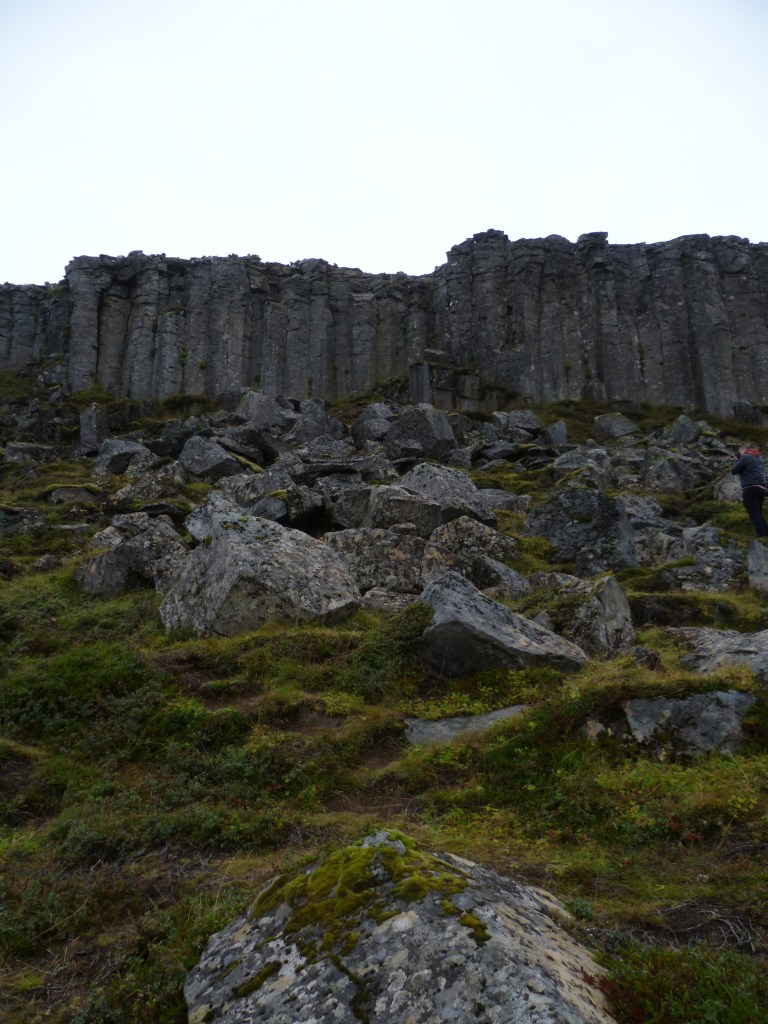
The whole Icelandic island is a mixture of perennial glaciers, wonderful waterfalls, spectacular moon-like scenery and bare land; to this, add geysers, volcanoes and much tundra. It also has beautiful fjords, especially in the North-West of the island.

Okay, taking into consideration all this, clearly the main source of food is not vegan (see fish and cattle and all that derives from them: all of them swim or roam free during their lives, and while here we don’t really condone eating animals, there is this meagre consolation.). But, as we are resourceful vegans, we can survive and thrive even in a not-that-vegan-friendly place.

Jökulsárlón
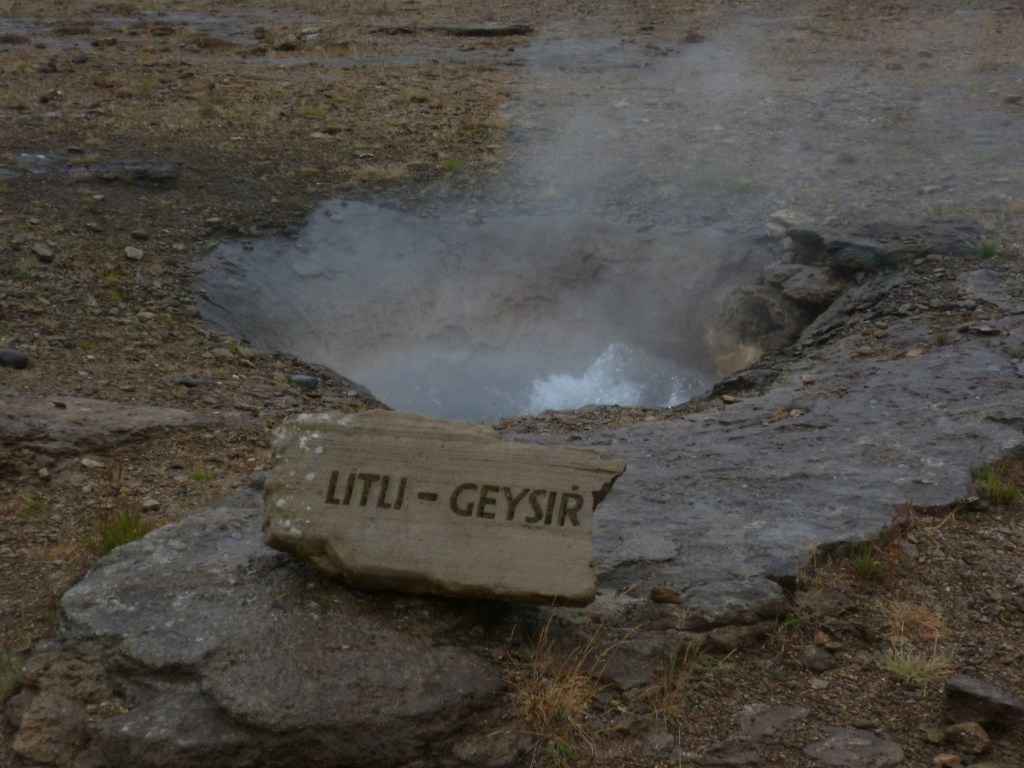
Litli Geysir

Vegan Iceland

To be honest, the first time I went to Iceland in 2014 I didn’t look too much into vegan places: I booked the 6-day trip very quickly basically from one day to another almost as a spur of the moment kind of thing and I hadn’t planned nothing. Also, I wasn’t too sure about the chance of Iceland having dedicated vegan places. As I relied on hostels, I was able to cook stuff for myself and the meals were mostly sandwiches and fruit. The sandwiches were consisting of bread, vegetable spread and salad ingredients. The brilliant thing was the presence of few healthy shops like Holland&Barrett, so there was quite a lot to choose from for my sandwiches. I survived well for the whole trip, from Reykjavik to Akureyri in the North, the East Coast and back to Rekjavik passing by the Vatnajokull and Vik in the South. There were also many 7/11 markets where I would grab snacks and I stopped for a couple of dinners to get chips from local restaurants.

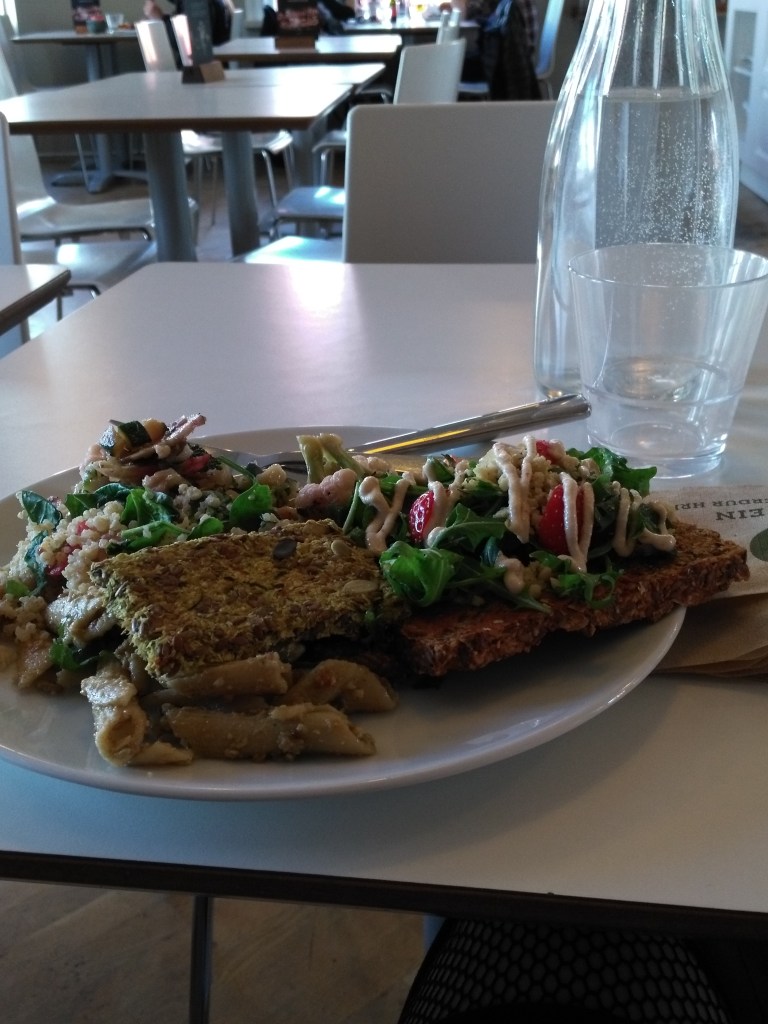
The second time I went was in 2017 for a Rammstein concert and I was much better-prepared thanks to a classmate who told me when she went to Rekjavik she actually had food in a vegan place, apparently quite famous: Mama Reykjavik. For my 3-day trip to the West Fjords (one part of the island that I didn’t manage to visit in 2014) I relied on some premade vegan-friendly food that I could find on the road as well as local cafes for small snacks along the road trip (that area is not very populated and you could go for several miles before being able to find some houses, but you would be surprised by what you could find in these isolated cafes these days -see vegan snickers at Stúkuhúsið – Café!).

Food from Mama Reykjavik
Snickers by Stúkuhúsið – Café

As you can see, it is possible to cope well as a vegan in Iceland: you can go almost everywhere and be able to eat more than decently. I don’t know if it would be possible to live for months or years in this country, but there are vegan places in Reykjavik so probably there are some “permanent” vegans (as opposed to the tourist ones).

It must be said that this food is not very cheap, but also Iceland, like the other Northern Countries in Europe, is generally speaking quite expensive. Both times I went, it was on a budget (£ 1,000 for food, accommodation and travels for 5-6 days): I looked for the best flight deals, stayed in hostels (which, by the way, are the best, cleanest, friendliest hostels you’ll ever find) and ate out 1-2 times each vacation, relying as I said, on markets.

Conclusion

Iceland is a fascinating country and if you can go, do it because it is worth it. This was a tick on my bucket list, and I am extremely happy to have been able to go there twice. If you think that as a vegan, it would be difficult, I hope this post helped in showing you that there are really no issues! The only slight problem might be the costs, but even if you do only one holiday per year, go to Iceland to spend a few days in one marvellous land.

Please, let me know if you have any questions or feedback 🙂

Love,

TVCL, xx